



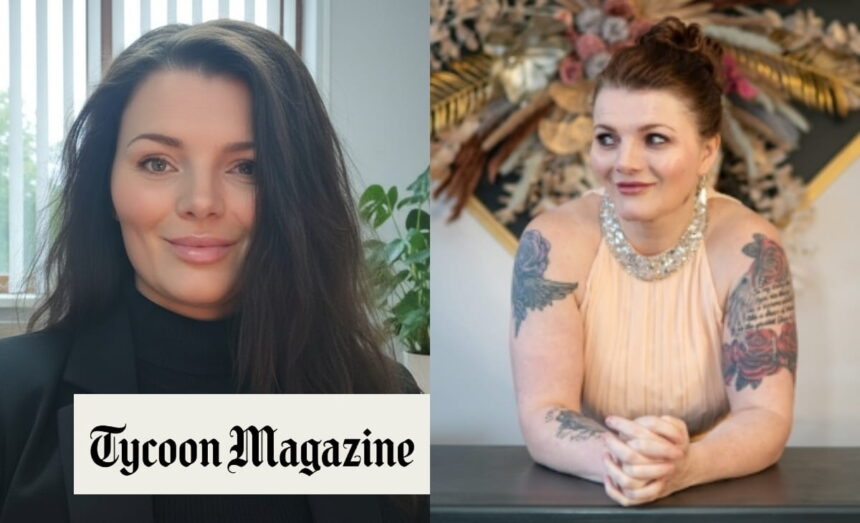
Surgical nurse. Midwife. Trauma specialist. Author. Advocate. Award-winning wellness practitioner. Mother to a daughter with cerebral palsy. Survivor of domestic abuse. Few lives embody resilience as powerfully as that of Dr. Sam Mishra.
Her journey is not defined solely by professional accomplishments, although they are impressive. Instead, it is marked by a remarkable ability to transform personal adversity into meaningful service for others. Through her work with The Medical Massage Lady, Dr. Mishra has built a practice that bridges the gap between clinical healthcare and holistic wellbeing, offering support to people whose pain often extends beyond the physical.
Combining expertise in nursing, massage therapy, trauma-informed care, breathwork, hypnotherapy, and transformational coaching, Dr. Sam Mishra has dedicated her career to helping individuals reconnect with themselves after life-altering experiences. Her philosophy is rooted in a simple but powerful belief: healing becomes possible when people feel truly seen, understood, and supported.
THE JOURNEY BEHIND THE MISSION
Your career has taken you through surgical nursing, midwifery, trauma support, and holistic wellness. What inspired this path, and what experiences shaped your commitment to women’s health?
My journey into women’s health was shaped as much by personal experience as professional training. It wasn’t a carefully mapped-out career plan. Rather, it evolved through life’s challenges and the lessons they brought.
Nursing gave me my first insight into the realities of healthcare and the vulnerability people experience when they need support most. Midwifery deepened that understanding. Being present during childbirth showed me the extraordinary strength women possess, particularly during moments of uncertainty and transformation.
Yet some of the most profound lessons came from my own life. Navigating domestic abuse, raising a daughter with cerebral palsy, managing chronic pain, and processing grief revealed limitations within conventional healthcare systems. While medical treatment is essential, I realized many individuals also need emotional, psychological, and compassionate support that often goes unmet.
A turning point came when I revisited massage therapy and remembered the comfort and benefits it had provided for my daughter. That experience helped me connect my medical background with a broader understanding of healing.
Every qualification and specialism I pursued afterward—whether oncology massage, trauma-informed bodywork, breathwork, or hypnotherapy—was driven by one question: what would genuinely help the people seeking support? That question continues to guide my work today.
My mission is deeply personal. I strive to provide the understanding, care, and resources that I once wished had been available to me.
You have worked in demanding healthcare environments while also caring for a child with cerebral palsy. How have these experiences influenced your understanding of resilience and recovery?
Working in labour wards and high-pressure clinical settings teaches you a great deal about human strength. I witnessed women enduring some of the most challenging moments of their lives while discovering courage they never knew they possessed.
Those experiences profoundly shaped my perspective, but becoming a parent to a child with cerebral palsy changed everything.
Watching my daughter navigate daily challenges with determination and grace taught me that resilience is often quiet. It doesn’t always look dramatic or inspirational. Sometimes resilience is simply getting through another day, adapting to circumstances, and continuing to move forward despite uncertainty.
I also saw firsthand how therapeutic touch and compassionate care could improve quality of life. Physical comfort can have a profound impact on emotional wellbeing, particularly for individuals living with disability or chronic conditions.
These experiences led me to embrace a more integrated view of health. Healing is not solely about addressing symptoms. It involves understanding a person’s history, emotional state, nervous system, relationships, and sense of identity.
One of the most important lessons I learned is that people are often far stronger than they believe. Many arrive feeling defeated or overwhelmed, yet they possess remarkable capacity for healing when given the right support and environment.
Your personal experiences with domestic abuse have also shaped your advocacy work. How has that journey influenced the way you support others today?
Surviving domestic abuse changes your understanding of human suffering in ways that no textbook or professional training ever could.
When you’ve lived through manipulation, fear, isolation, and emotional devastation, you develop a deep appreciation for how trauma affects every aspect of a person’s life. You understand the confusion, the self-doubt, and the invisible wounds that remain long after the abuse ends.
For many years, I lived in survival mode while trying to protect my children and maintain some sense of normality. Those experiences were incredibly painful, but they also shaped the practitioner I became.
Today, my approach is grounded in empathy rather than assumption. I don’t need clients to explain every detail of their experience for me to recognize their pain. I understand how difficult it can be to trust, to ask for help, or even to acknowledge what happened.
That understanding allows me to create spaces where people feel safe enough to begin healing.
My advocacy work stems from a commitment to ensuring that survivors have access to support, education, and resources. No one should have to navigate trauma entirely alone, and I believe every survivor deserves to be treated with dignity, respect, and compassion.
REDEFINING WELLNESS & TRAUMA CARE
As a trauma practitioner and transformational coach, what emotional challenges do you believe many women carry without recognition or support?
Many of the deepest struggles women face are the ones they rarely speak about openly.
Shame remains one of the most damaging consequences of trauma. Whether it stems from abuse, neglect, betrayal, or societal pressures, shame can profoundly affect how women see themselves and interact with the world.
Many carry beliefs that they are somehow responsible for what happened to them or that their experiences diminish their worth. These beliefs often manifest through people-pleasing behaviours, difficulties establishing boundaries, and a persistent fear of rejection.
Motherhood presents another challenge that is frequently overlooked. Women often dedicate themselves entirely to caring for others and eventually find themselves disconnected from their own identity. Reclaiming a sense of self can be both confusing and emotionally overwhelming.
Body image and physical connection are also deeply affected by trauma. For many women, the issue extends beyond appearance. Trauma can create a profound disconnect between a person and their body, making intimacy, self-expression, and even self-care feel uncomfortable or unsafe.
At the heart of many struggles lies a belief that they are somehow not enough. Helping women challenge and replace that belief is a significant part of the healing process.
Why is emotional safety so essential in trauma-informed healing?
Emotional safety is not simply a desirable element of therapy—it is fundamental to the healing process itself.
Trauma affects the nervous system in profound ways. Many survivors live in a constant state of vigilance, even when no immediate threat exists. Their bodies remain prepared for danger, making it difficult to relax, trust, or fully engage in recovery.
Without emotional safety, the nervous system remains activated, and meaningful healing becomes significantly more difficult.
For survivors, trust has often been damaged or broken. Therefore, every aspect of a therapeutic relationship matters. Consistency, clear boundaries, respect, and compassion all contribute to creating an environment where healing can occur.
When people finally experience genuine safety, remarkable changes begin to happen. Their bodies start to relax. Their minds become less consumed by survival. They gain space to process emotions, explore experiences, and reconnect with themselves.
Equally important is the restoration of choice. Abuse and trauma frequently involve a loss of control. Safe therapeutic environments help individuals rediscover their agency and rebuild confidence in their ability to make decisions about their own wellbeing.
That process can be transformative.
Your work combines massage therapy, breathwork, hypnotherapy, energy healing, and spiritual coaching. How do these approaches complement one another?
I view healing as a multidimensional process. Because trauma affects people on multiple levels, recovery often requires more than one approach.
Massage therapy helps address physical tension and patterns stored within the body. It creates opportunities for relaxation and nervous system regulation that many clients have not experienced for years.
Breathwork offers another pathway. Through conscious breathing practices, individuals can access emotions and experiences that may be difficult to reach through conversation alone. It can also help regulate stress responses and increase self-awareness.
Hypnotherapy allows us to explore deeply rooted beliefs and behavioural patterns. Many limiting beliefs originate during childhood or traumatic experiences, and hypnotherapy can help individuals challenge those narratives.
Energy healing and Reiki provide additional support for clients who feel drawn to those modalities. While each person’s experience is unique, many find these practices beneficial for restoring balance and promoting emotional wellbeing.
Spiritual coaching brings all of these elements together by helping individuals reconnect with purpose, meaning, and identity.
Rather than competing with one another, these approaches work in harmony. Each serves a different purpose, creating a comprehensive framework for lasting transformation.
LEADERSHIP, ADVOCACY & EMPOWERMENT
As an educator and accredited training provider, how do you encourage practitioners to combine professional expertise with genuine compassion?
One of the most important lessons I teach is that technical competence alone is not enough.
Healthcare and wellness professionals need strong clinical knowledge, but they also need emotional intelligence and a deep understanding of the human experience.
In my training programmes, I emphasize the importance of trauma awareness. Understanding how trauma influences behaviour, communication, and physical responses enables practitioners to provide more effective and compassionate care.
I also encourage professionals to embrace authenticity. People connect with sincerity. When practitioners approach clients with openness, humility, and empathy, trust develops more naturally.
Ultimately, I believe the most effective practitioners are those who balance expertise with humanity. Both are essential for meaningful outcomes.
You have received international recognition through awards, publications, and media contributions. What does that recognition mean to you?
Recognition has been both humbling and deeply meaningful.
As someone who experienced significant adversity throughout life, there was a time when I never imagined my work would be acknowledged on an international scale. The journey from personal struggle to global recognition is something I do not take for granted.
On a personal level, these achievements represent resilience, growth, and perseverance. They remind me how far I’ve come and serve as a testament to the possibility of transformation.
Professionally, recognition has expanded my ability to reach and support more people. Through publications, speaking opportunities, and media platforms, I have been able to raise awareness around trauma, abuse recovery, and holistic healing.
However, awards are not what motivate me.
Whether it’s a client finding relief after years of suffering or a practitioner applying new knowledge to better support their clients, those moments are the most rewarding.
Recognition creates opportunities, but service remains the true purpose behind everything I do.
Through your workshops, retreats, podcast, and writing, what message do you most hope women take away from your work?
The message I hope women carry with them is that their experiences do not determine their value.
They internalise criticism, shame, and self-doubt until those beliefs become part of their identity.
I want women to understand that healing is possible and that vulnerability is not weakness. In fact, acknowledging pain often requires extraordinary courage.
I also want them to know that sensitivity is not a flaw. The qualities society sometimes encourages women to suppress—empathy, intuition, emotional awareness—can become powerful strengths when embraced.
Healing does not mean erasing the past. It means developing a new relationship with it.
If my work helps even one woman trust herself more deeply, set healthier boundaries, or recognise her own worth, then I consider that meaningful success.
VISION, LEGACY & THE FUTURE OF WELLNESS
How do you see women’s wellness and trauma-informed care evolving over the next decade?
I believe we are entering an important period of change.
Awareness surrounding trauma has grown significantly in recent years, and I expect that progress to continue. More practitioners are beginning to understand the relationship between emotional experiences, nervous system regulation, and physical health.
In the future, I hope trauma-informed care becomes a standard component of healthcare, education, and wellness services rather than a specialised niche.
I also anticipate a growing emphasis on community-based healing. Human connection plays a crucial role in recovery, and supportive communities can provide something that individual treatment alone cannot.
Accessibility remains another critical issue. Healing services should not be limited to those with significant financial resources. Expanding access will require innovation, collaboration, and commitment across the entire industry.
The future of wellness must be inclusive, evidence-informed, and genuinely compassionate.
What legacy do you hope to leave for future generations of women and healers?
My greatest hope is that my work encourages people to see wounds differently.
For women, I hope my story demonstrates that adversity does not have to define a person’s future. No matter how difficult the journey, transformation remains possible.
For practitioners, I hope to leave a legacy of higher standards, deeper compassion, and a commitment to truly understanding the people they serve.
If the therapists I train continue supporting others with integrity and empathy, and if the survivors I work with go on to inspire healing within their own communities, then that ripple effect will be far more meaningful than any personal achievement.
Legacy is not measured by titles, awards, or recognition. It is measured by the lives touched, the hope restored, and the healing that continues long after we are gone.
And if there is one thing I would like future generations to remember, it is this: healing becomes possible when people are met with understanding, dignity, and the belief that they are worthy of recovery. That belief has shaped my life’s work, and it is the legacy I hope to leave behind.
Visit Tycoon Magazine for More Latest Updates